
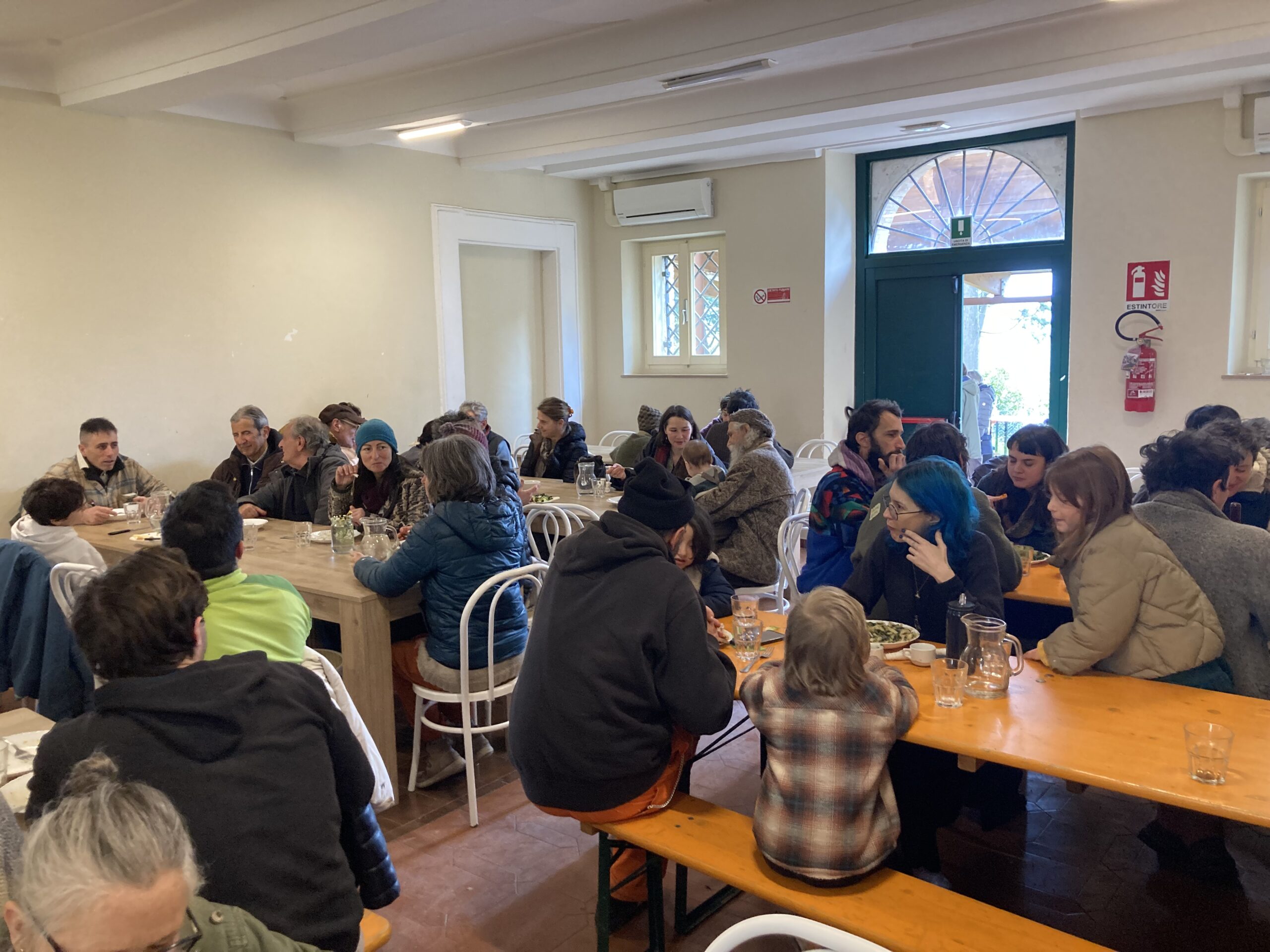

When we get to know well a reality, an association, a human environment, while familiarity offers us greater comfort in action and movement, our gaze tends to lose some of the freshness of our first encounters.
Beginning with this reflection, Fabrizio Romagnoli, a veteran of the association, and yours truly, a neophyte, we thought we would weave an article from the very voices of those who in early March in Fano faced a WWOOF Italy National Gathering for the first time. The intent is to redistribute some of that sense of discovery, of novelty even to those who have been hanging out in WWOOF for a long time already, and at the same time give a home to those who are taking their first steps in the association, bringing lifeblood and observations that will build the association of tomorrow.
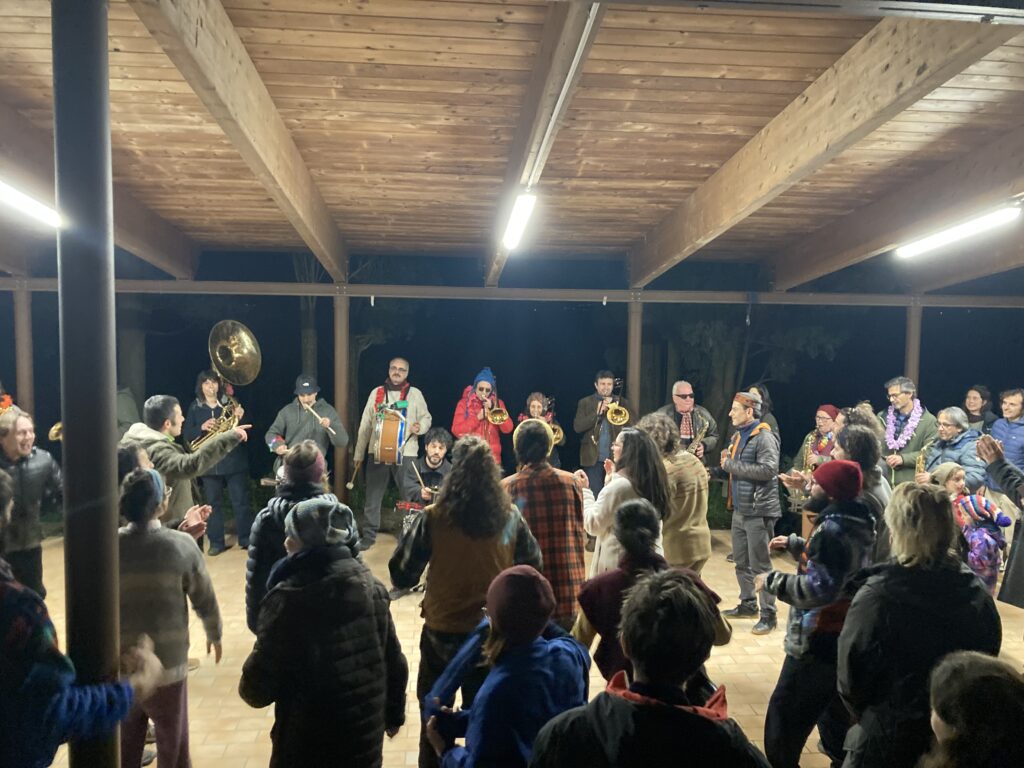
What leads to entering the WWOOF world.
When I phone Matteo Botta, a research analyst living in Milan, he is in a truck stop, and he is headed for his first wwoofer experience.
“I’m looking for a change in my life, I no longer want to live in an urban, highly populated area like Milan,” he tells me, “and this is a moderate first step toward that direction. I mean, it would be kind of crazy to drop everything on the spot, sell my house and buy a farm without even having tried before.”
His hope, he tells me, is to learn as much as possible about agriculture, permaculture, animal husbandry, food processing and preservation. “It will be easy to surprise me, since I’m a beginner,” he adds. Beyond that, then, there is a desire to cultivate a spirituality. “You don’t need gurus to be spiritual,” he explains, “I find there is also a lot of spirituality in knowing and appreciating the rhythms and cycles of nature.”
Giovanna D’Alonzo, on the other hand, is in her bright home in Naples. In life she runs a restaurant and is a very active member in a Solidarity Purchasing Group, which she immediately starts telling me about.
“I am part of a GAS with a strong political matrix, because today it is no longer enough to be a critical consumer, we need to act on other levels.” A central theme, which returns several times during our conversation, is the need to reduce the distance between the countryside and the city.
“I’m starting to feel squeezed into the logic of the Buying Group, because I know that much more can be done: planning crops together, co-producing…” Wwoof, within this vision, is a reality that can foster encounters between citizens and those who produce food, dismantling a romanticized view of the countryside and increasing awareness of what is behind what we eat.
“More than traveling far, I’m interested in learning about and getting to know the countryside of the area around us, strengthening ties within the bioregion.” In this sense, it would be interesting if the platform allowed people to find other woofers in their own town, to meet and start building relationships.
One missed call here, one in Calabria, and we finally get to hear from Mattia Nigro, who has a farm, a medicinal plant distillation lab, and has been registered as a host for a few years.
“I learned about Wwoof through two guys who were traveling by bicycle and who coincidentally told me about this possibility,” he says. Those who have been to the Gathering may remember him as the one who hosted more than 300 people in a few years, attracting the attention and enthusiasm of his host area. “I got to meet so many nice people,” he says, “In addition to farming and harvesting for essential oils, the woofers who come have the opportunity to enjoy a small recording studio inside a yurt.”
“It all originated from a lady who came from France with a violin and said to me one day, “You know, I wrote a song about the Sea Rose, would you like it if we did an arrangement together?” I play the guitar, my brother plays the bass, another woofer plays the flute, and that’s how the first song was born.” Today, sound after sound, the songs have grown to twelve, but what is most amazing is the story of the relationships that the co-creation of music has allowed to be built.
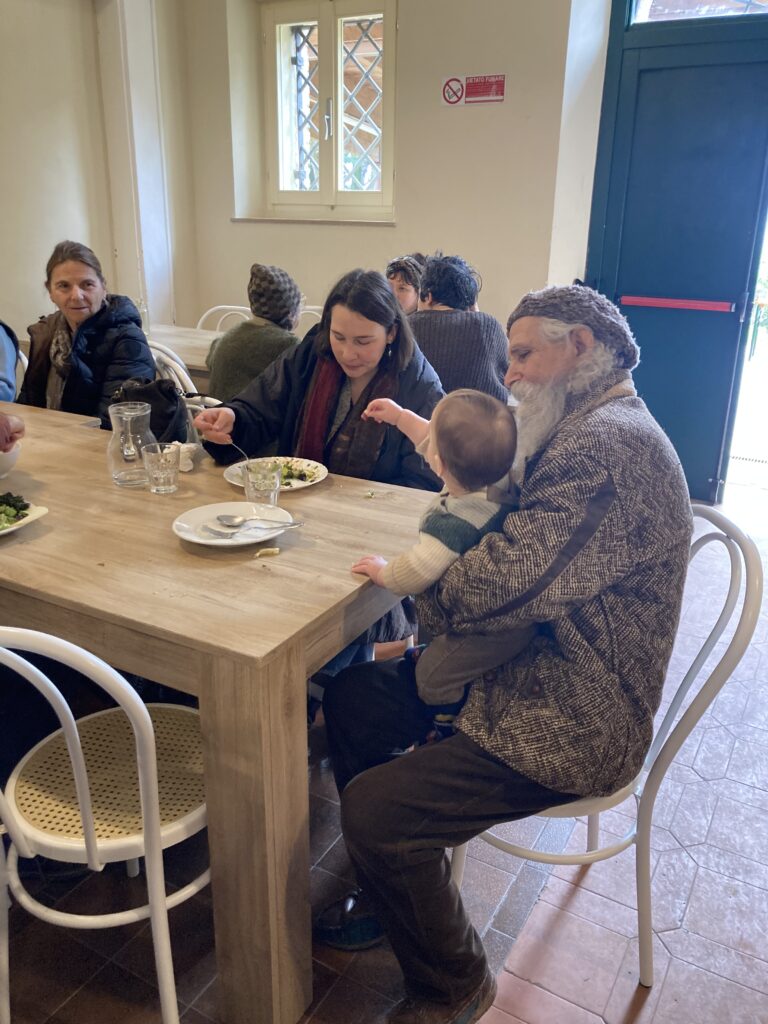
The Gathering
“I have worked in international trade for many years, and now I am trying to realize my farm house, a dream I have been cultivating since I was a child,” says Soheil Tayebi Rad, from Reggio Emilia. “The idea is to build a space of peaceful coexistence among us human beings: in fact, part of my project is social and artistic, and the goal is to combine it with a fair amount of self-sufficiency.” “I arrived at the Gathering with an open heart, and I felt welcomed. Plus, surprisingly, I also met some dear friends.”
For Giovanna, the sense of familiarity was also strong. “In a world that doesn’t really go the way one would like, many times one has the feeling of being an alien, instead in that context I didn’t feel that way. What struck me was that already from the first morning there was the Caes sail with flyers, and we as GAS already have an agreement with them for years. There were Daniela Conti’s flyers, and we did a documentary review last year, Sprouts of the Future, where among the guests was her talking about the new GMOs. There was Dulce’s banquet with Tatawelo products, and we just closed an order with them,” she recounted. “When I tell you I didn’t feel like an alien, it’s because right from the start I found so many bits and pieces of what I had just left at home.”
On the human level, however, “the atmosphere was very sociable. I’m not and we’re not kids anymore, so it’s not enough to share a direction of gaze to become friends right away, it’s clear. We recognize each other, we smell each other, but from here to building relationships takes time.”
Michele Pagano of Melito, also from Campania, is my final caller. “I have always had a family farm, where we have pigs, chickens, vegetable garden, orchard. We do subsistence farming, and now we are rearranging the house with small green building projects,” he tells me.
“I came to the Gathering with my family: me, my partner and our 4-year-old son. It was very nice, we met a lot of people with similar views to ours, and there were also activities organized for the children, so they had a lot of fun.
Without knowing it, as echoing Joan, he adds “it was mostly a time to meet and recognize each other among like-minded people, to not feel out of touch in wanting to lead a rural life, with clean agriculture.”
For Matthew, however, the arrival was impactful. “The first day I had a little culture shock, I felt out of place and for a momentI even thought about leaving. Then you want to say that I am a curious and outgoing person, you want to say that the people were welcoming, I ended up staying and I had a great time.”
“What could help those who are more introverted?” I ask him. “Maybe having a person to introduce you around, to tell you anecdotes about the association. I have to say, though, everyone has been very helpful anyway, so it’s like there’s been a widespread mentor in a way.”
“I was surprised at the functionality of the association,” Soheil recounted, recalling other entities he has been a part of. “It’s not always like that,” he added.
“There was a good atmosphere,” Mattia added, “I felt a lot of freedom of expression.”
“I found an association that is going through a time of change, as all long-lived associations go through when the numbers increase so much,” Giovanna explains. “What always creates a bit of difficulty are the management mechanisms between the horizontality that is desired and the verticality that happens, spontaneously, because everywhere there are more active people to whom others delegate, and this drags with it a whole series of discussions, which are widespread in all associations.”
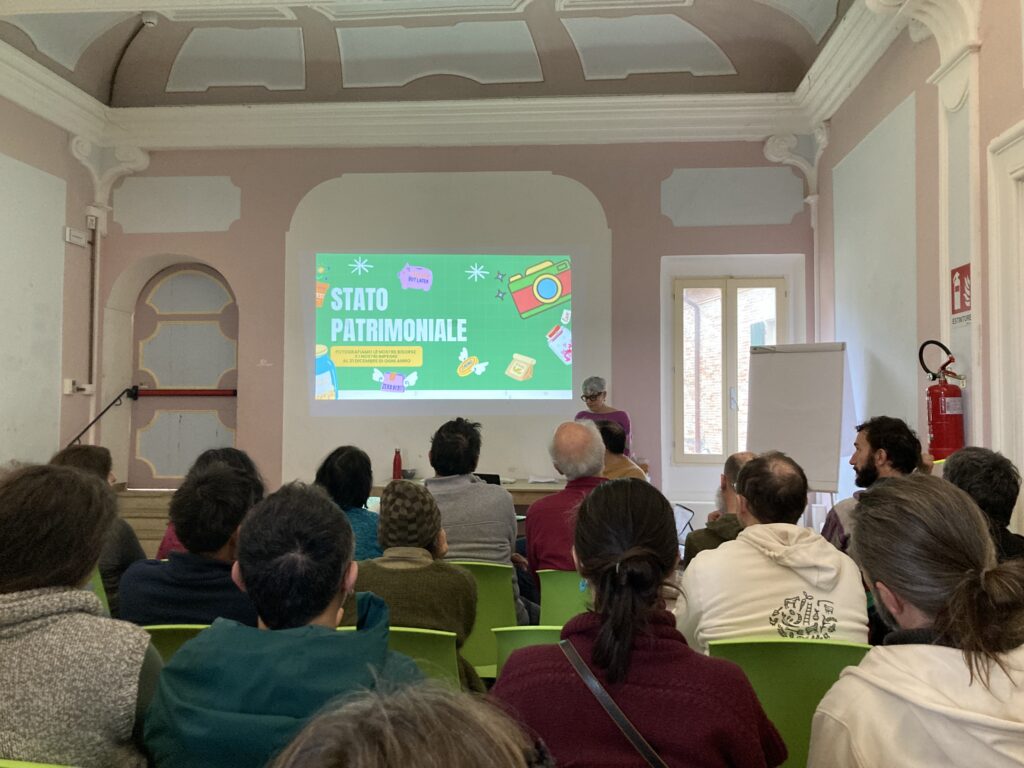
Among the assembly moments that stuck out the most, to great surprise, were the Budgets, which provided a glimpse into internal operations. Then came the presentation and awarding of the projects that participated in the “Growing with Us” call for proposals, the debate that opened regarding the new GMOs, and the engaging and lively circle around the theme “Subsistence Farming and Income Farming.” “There is so much diversity within the same association,” they told in several voices. “It ranges from large farms, with all the technologies, to those who live off grid, aiming for self-subsistence and making strong lifestyle choices.”
“It also struck me how smoothly and collaboratively everything worked even in that anarchic spirit,” shares Mattia. “People wanted to participate and make the event work, and in a self-managed and spontaneous way it happened. You didn’t even have to ask,” he notes, “people rolled up their sleeves where they needed to, peacefully.”
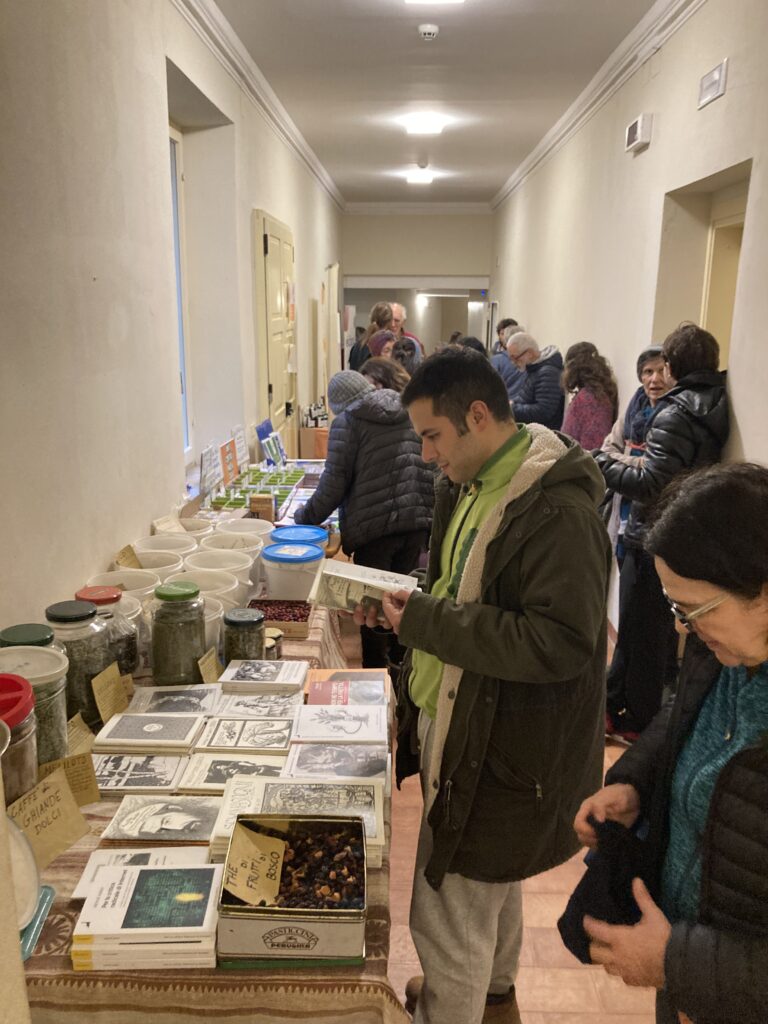
Returning home
By now at home, I have Simone, my partner and a farmer with whom we have been producing blueberries and other small fruits in the Biellese region for a number of years, read the article above, hosting woofers.
“For me, the most beautiful aspect was getting to know other hosts and farmers. Working the land, dedicating myself to an area, has led me to have a more stable lifestyle, to travel less, and the chance to meet so many people who have made similar choices to mine, exchanging knowledge and experiences has been a great asset for me,” he says.
“Previously for me WWOOF was a platform for volunteers to arrive, while now we also have the feeling of being part of a network with similar views scattered throughout Italy,” Michele says, and in these words I catch echoes of other conversations as well.


0 Comments