
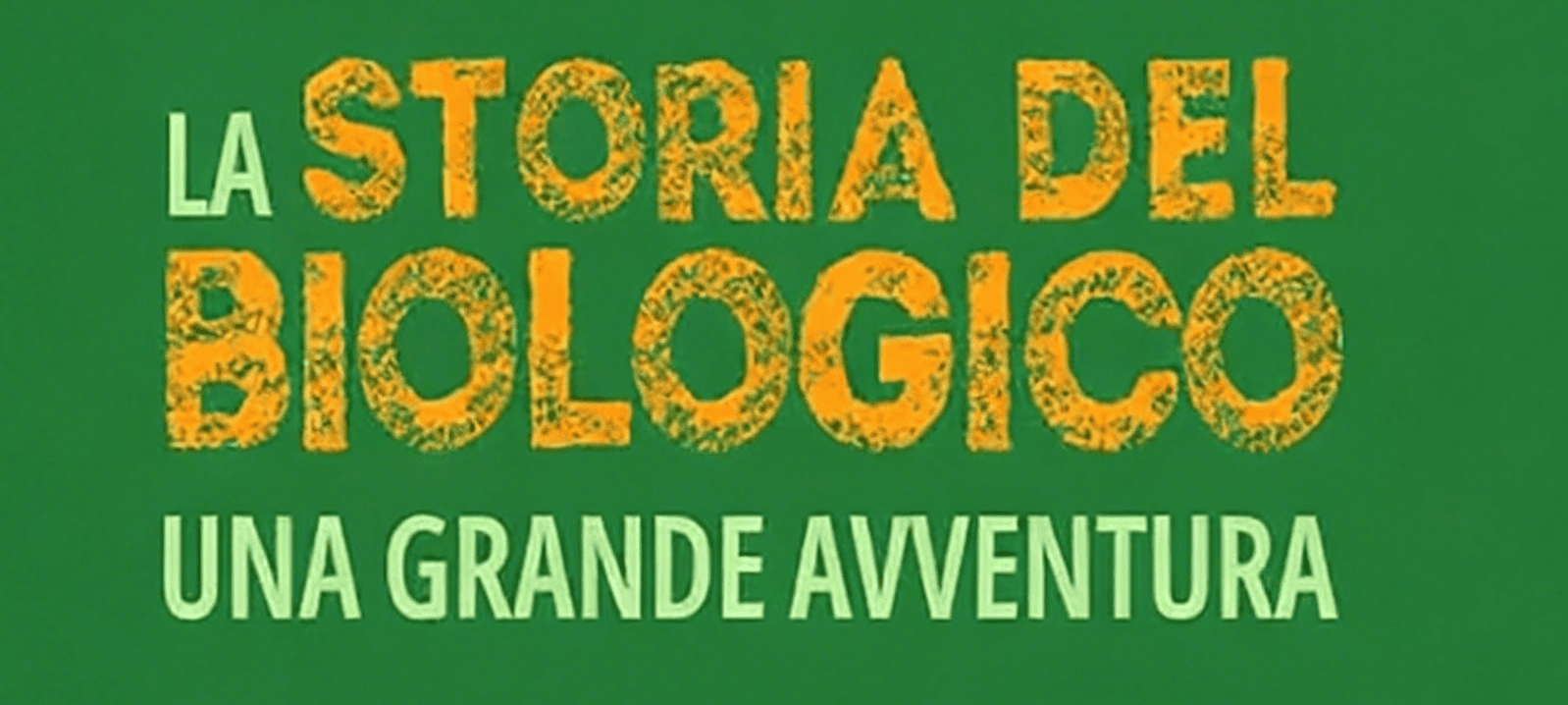
By Alberto Berton. Jaca Book 2023
How did ‘organic’ come about? Alberto Berton details all the steps along the path of this agricultural theory and practice, from the first concerns about the outcome of chemical fertilization in the late 19th century to today’s concerns about the new GMOs, or TEAs as the Italian government has wanted to call them, which still have to go through a few passes of the law before we find them in our fields without label indication, as the large multinational corporations that claim to rule agriculture would like.
Organic farming is now a hundred years old. In the late 1800s people were already beginning to study the organic nature of the soil, discovering life under the ground, but also that with chemistry the flavors of vegetables had been lost. At that time, the N-P-K law began.
We need to go as far as 1924 to find the first experiments in chemical-free farming, in Indore in central India by Albert Howard; also from the same year are Rudolf Steiner’s eight lectures on agriculture, which were the basis for the birth of biodynamic agriculture.
Following the Dust Bowl, a series of sandstorms that hit the central United States and Canada between 1931 and 1939, caused by decades of inappropriate farming techniques and lack of crop rotation, recounted by John Steinbeck in The Grapes of Wrath, the U.S. government began to worry about soil conservation.
In 1962, Rachel Carson’s book Silent Spring had shown how DDT, used against insects, entered the food chain, and the subsequent wave of the hippy movement of the 1960s gave impetus to the organic movement, which is not just another economic sector but a highly original mixture of scientific cognition and humanistic values, alternative worldviews and blueprints for future societal arrangements.
Berton then tells us how in the following years ‘organic’ has been heading towards more widespread use, in supermarkets, with the different positions and considerations in this regard: has this direction ‘corrupted’ organic, forcing it into the meshes of the market, or has it allowed for more widespread use?
A small chapter is devoted to the bioeconomics of Georgescu-Roegen, who argued that “if food production through agro-industrial complexes became the general rule, many species associated with old-fashioned organic agriculture might gradually disappear, a consequence that would perhaps lead humankind into an ecological dead end with no possibility of return.” Today, the term ‘bioeconomics’ is used in a completely different sense than its original one, as a macro sector of the economy encompassing agriculture, fisheries, forest management, biotechnology, bioenergy, and biomaterials.
With the introduction of biotechnology in agriculture, with the creation of Genetically Modified Organisms, yet another chapter opens, which is the one we are experiencing today, and although the data book of 2023, it documents us on the process of introduction and the considerations therein, as well as the ecological responses to genetic manipulation in the laboratory with evolutionary genetic improvement proposed by Salvatore Ceccarelli, as well as the importance of agroecology as a new model.
presentation by Isabella De Caria






0 Comments